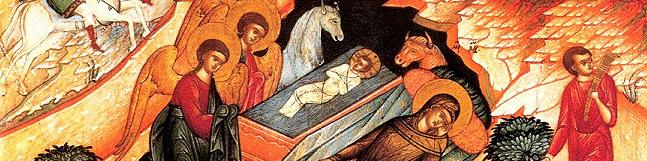
The real insight of Augustine’s psychological analogy for the Trinity is not its “explanation” of the fecund mystery of the divine nature, but rather its discovery that the mind is a created pattern of Trinitarian existence naturally and supernaturally - by divine grace – fit for participation in Uncreated Life.
Showing posts with label Philosophy. Show all posts
Showing posts with label Philosophy. Show all posts
Friday, September 21, 2007


Wednesday, August 08, 2007
Pensées August 8, 2007
If evil is a privation of good, it is necessary that arguments in favor of evil suffer an analogous privation of reason. This is why arguments in support of immortality are bereft of intelligibility, as is evident to those who are looking for it.
Tuesday, July 10, 2007
Pensées July 10, 2007
Some scientists, especially the popularizes, claim to embrace philosophical materialism for scientific reasons. Yet, many philosophers know that there are no scientific reasons for philosophical materialism. In fact, philosophical materialism does not fit the criteria of a scientific hypothesis. It is neither quantifiable nor empirical. Neither is the argument that hypothetical materialism is more suited to scientific endeavor to any effect since the method is limited to the mathematical principles of natural objects and is neutral with regard to immaterial objects.
Thus the claim to espouse philosophical materialism for scientific reasons is, at root, confusion common among non-philosophers, whether they are scientists or not.
Thus the claim to espouse philosophical materialism for scientific reasons is, at root, confusion common among non-philosophers, whether they are scientists or not.
Wednesday, July 04, 2007
Pensées June 4, 2007
Most scientists are not philosophers.
As such, some scientists commit the same intellectual errors typical of other non-philosophers.
The antireligious bias and vehemence of some popularizers of scientific knowledge only exacerbates and illustrates this problem.
As such, some scientists commit the same intellectual errors typical of other non-philosophers.
The antireligious bias and vehemence of some popularizers of scientific knowledge only exacerbates and illustrates this problem.
Wednesday, January 31, 2007
'I had rather believe all the fables of the Legend and the Talmud and the Alcoran, than that this universal frame [the Universe] is without a mind; and, therefore, God never wrought miracle to convince Atheism, because His ordinary works convince it. It is true, that a little philosophy inclineth man’s mind to Atheism; but depth in philosophy bringeth men’s minds about to religion.'
Francis Bacon (1561-1626) ‘Of Atheism’, Essays.
Francis Bacon (1561-1626) ‘Of Atheism’, Essays.
Thursday, July 13, 2006
I was at the bookstore today - during my lunch break - and I thought I was going to buy a copy of ‘The Triads’.
But they also had ‘The One Hundred and Fifty Chapters’ and ‘Dialogue Between an Orthodox and a Barlaamite'.
I was very tempted I have to say.
Too bad I could only afford one!
Needless to say, I think I made the right decision.
I am now the proud new owner of....
‘Being and Some Philosophers’ by Etienne Gilson.
Call it heresy, but I am just a sucker for this stuff!
But they also had ‘The One Hundred and Fifty Chapters’ and ‘Dialogue Between an Orthodox and a Barlaamite'.
I was very tempted I have to say.
Too bad I could only afford one!
Needless to say, I think I made the right decision.
I am now the proud new owner of....
‘Being and Some Philosophers’ by Etienne Gilson.
Call it heresy, but I am just a sucker for this stuff!
Tuesday, June 27, 2006
A Call for Republication: 'A Gilson Reader'
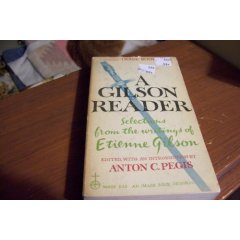
There is beginning to be a renewed interest in the thought of Etienne Gilson. I have yet to discover, however, a blog or a website dedicated specifically to the wisdom and scholarship of this eminent historian of mediaeval philosophy. I, for one, would like to see the historic thomistic intellectual tradition, so richly informed and masterfully guided in the middle of the last century by Gilson, pick up again where the Rahnerians and Lonerganians left it.
Friday, June 23, 2006
Subjective Faith and the Value of Philosophy
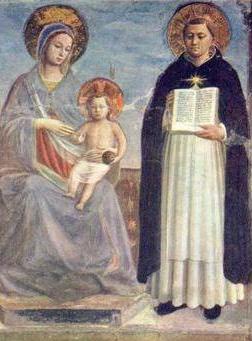
What justification can we offer for the use of philosophy in theology? The objects of Christian faith are certainly the articles of the Creed, which are essentially summaries of the doctrines of revelation, materially identical to the sacred text. But the subject of faith is the created intellect, the very nature of which is to seek understanding. Since the articles of faith, in virtue of their supernatural character – even as revealed truths, are incomprehensible to the created intellect, the will, which is also the subject of faith, moves, by the same infused virtue, the intellect to assent to these mysteries. This movement of the intellect by the will, infused with the theological virtues of faith, hope and love, is the very definition of contemplation. Thus theology, because it is rational reflection on the object of faith, hope and love, is a contemplative act. The contemplative character of theology requires the application of cultivated reason. Philosophy is cultivated reason.
Tuesday, June 20, 2006
Natural Aesthetics

My wife and I have begun to notice a pattern in our two-year-old son’s response to the sacred environment of the sanctuary in the few parishes where we attend Sunday services. When we go to the “traditional” looking church, with its cruciform stone buildings, iconographic Stations of the Cross, rich tapestried reridos, antique wooden crucifix, and golden tabernacle, he repeatedly asks us, “What’s that?”. But when we go to the “modern” looking church, with its circus-tent-like interior school-bricked structure, ambiguous center, Stations hidden on account of its semicircular shape, and complete absence of a reridos, he asks us nothing.
I think we can learn something from children in this situation. We are, as St. Thomas argued against many of his contemporaries, a single substantial form of both body and soul. We ‘are’ our bodies. We also use our bodies, as Aristotle taught, to know, not only the things outside of us, but our very selves. The senses are the doorways through which experience and knowledge passes. The liturgy and the sacred environment as a whole ought to meet us there. Because we are bodies by nature, we are inclined to believe what we experience as beautiful. Divine worship must take seriously the role of the body if it seeks to engage the whole person in a manner consistent with its nature.
Monday, June 19, 2006
Romanus Cessario's 'A Short History of Thomism'

While traveling for work this past week I was reading Romanus Cessario’s A Short History of Thomism. He makes an argument which I found surprising. He suggests that the various fortunes of Thomism in the modern era have had less to do with its intrinsic qualities than with extrinsic circumstances.
‘The historical reasons for widespread intellectual inactivity differ from period to period. For instance, the explanations may stem from physical causes, such as the Black Death that emptied cloisters and university halls not only of students but also of a generation of talented professors…On the other hand religious dissention, such as followed upon the inception of divisions within Western Christianity, occasioned social upheaval that thwarted the development of Thomism. In some places, Protestantism resulted in the closing of the convents and schools where the Thomist tradition had been studied and passed on. Let two geographical examples suffice: The strong tradition of scholasticism in general and Thomism in particular that flourished in the British Isles, especially at Oxford, was abolished at the time of the sixteenth-century break with Rome, and only returned there in the early twentieth century when New Blackfriars was opened in Oxford. Likewise, the tradition of Thomist mysticism that flourished in the Rhineland during the late thirteenth and fourteenth centuries and the remarkable enthusiasm for the Summa Theologiae that succeeded it in the second half of the fifteenth century disappeared in the German principalities that were lost to Rome at the time of the Protestant Reform. This turn of events left Bavarian Benedictine monks as the chief custodians of German Thomism.’
‘On a larger scale, political turmoil often dramatically interrupted the continuation of professional intellectual life, such as happened at the French Revolution, when religious orders – including the Dominicans, who had been the principle carriers of Thomism in the late eighteenth century – were either disbanded or severely restricted in all but a few places in Western Europe…Considerations such as these allow one to argue that when Thomism stopped playing an active role in the intellectual life of certain historical periods, the reasons frequently had little to do with the inherent worth of Aquinas’s thought or its potential to attract followers. The explanation is to be found in extrinsic factors that inhibited the careful study and appropriation of Aquinas and his texts.’ (p. 36-37)
Subscribe to:
Posts (Atom)

